Portugal
 Spain
Spain France
 Germany
 United Kingdom
  Monaco







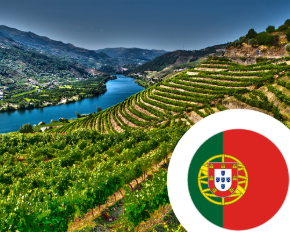
























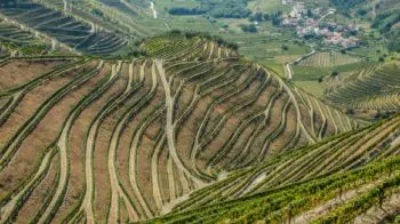
Portugal has a long tradition of wine production and is one of the most respected wine-producing countries in the world. It was the first to have a demarcated and regulated wine region – the Douro, in 1756. It also has two wine-producing regions protected by UNESCO as World Heritage Sites: the Alto Douro Vinhateiro and the Paisagem Vinha da Ilha do Pico in the Azores.
Portugal
Portugal is a small country (92,072 km²) in southwestern Europe. It is part of the Iberian Peninsula, with Spain being the other country on this peninsula. Portugal also consists of two archipelagos, the Azores and Madeira, the first being the westernmost point in Europe.
It has 10.5 million inhabitants, the vast majority of whom are concentrated on the coast, between Lisbon and Porto.
Each region in Portugal has a different climate: regions near the sea have milder temperatures throughout the year, while inland regions have harsh winters and dry summers.
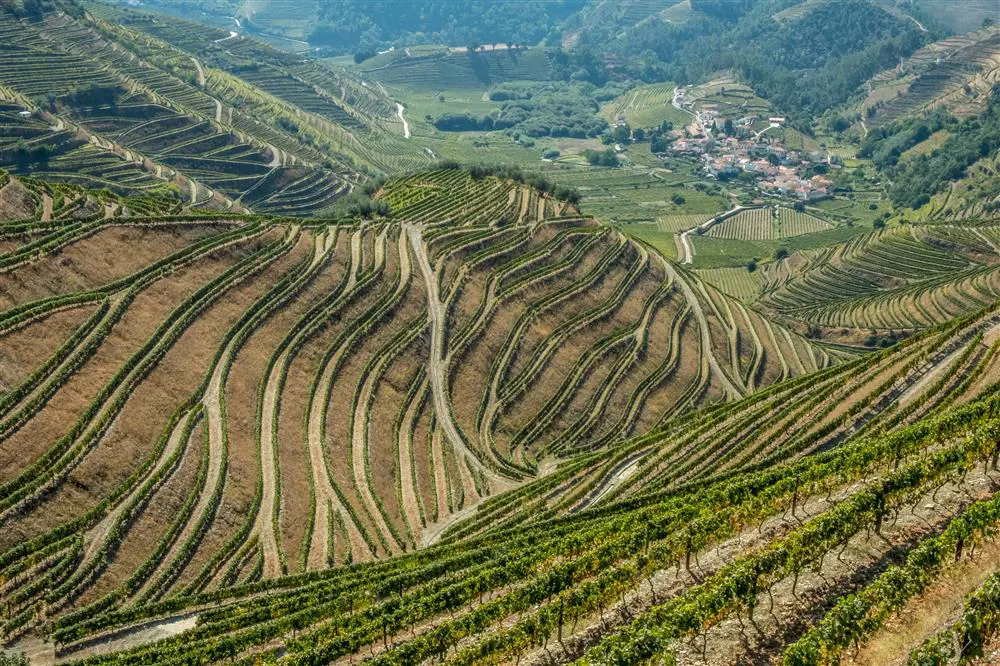
The terroir of Portugal
The terroir is a combination of several factors, such as soil, climate, topography, sun exposure, among others, that give the wine characteristics that distinguish it from other wines. Portugal is a country with centuries of experience in evaluating and making the most of its terroir.
Regarding the climate in Portugal, the Portuguese Meteorological Institute states that in general the country has a humid temperate climate with dry summers, and in some parts of the Beja district it has an arid climate.
There is a wide variety of soils present in Portugal: sandy, schist, granite, limestone, basaltic and clay soils.
The art of the blend in Portuguese wine
The blend is the combination of two or more grape varieties in the vinification of a wine. If a wine, on the other hand, is made from a single grape variety, it is called varietal or monovarietal.
Portuguese winemakers are known worldwide for being masters in the art of the blend. They are used to bringing out the best characteristics of each variety, such as fruity aromas, floral aromas and acidity, thus creating the perfect blend.
Within the blend world there are two different types:
Blend in the vineyard – the mixing of grape varieties takes place in the vineyard. Usually it is done in old vines, where the exact grape varieties that are planted are unknown.
Blend in the cellar – the mixing can take place before vinification, with the grapes fermenting together, or at the end of the vinification process where, with the help of tasting and chemical analysis, wines of different varieties are blended in order to obtain the desired wine.
The typical blends of each region are:
- Lisbon / Tejo / Setúbal Peninsula – Touriga Nacional / Castelão
- Douro – Touriga Nacional / Tinta Roriz / Touriga Franca
- Bairrada – Bical / Maria Gomes; Touriga Nacional / Baga
- Dão – Encruzado / Malvasia Fina
- Alentejo – Roupeiro / Antão Vaz / Arinto; Trincadeira / Aragonez / Alicante Bouschet
- Vinhos Verdes – Loureiro / Avesso / Arinto; Alvarinho / Trajadura
Wine traditions that still remain in Portugal
- Grape treading and fermentation in lagar
- Fermentation in clay amphorae
- Skin contact in some white wines
- Fermentation with indigenous yeasts, present on the grapes themselves
- Ageing in large old wooden barrels
Wine regions of Portugal
Azores – composed of nine islands, it is located in the Atlantic Ocean, halfway between the European and North American continents. It has three appellations of origin: Graciosa, Biscoitos and Pico.
The maritime influence is evident in the high rainfall and mild temperatures throughout the year. The very poor soils are of volcanic origin.
With regard to the vines, they were planted inside corrals, protected from the weather by volcanic stone walls which, releasing the heat accumulated during the day, help to warm the vines during the night, protecting them from the harshness of the winds.
Alentejo – it is one of the largest wine regions in Portugal and where some of the best wines in the country are made. It has eight appellations of origin: Reguengos, Borba, Redondo, Vidigueira, Évora, Granja-Amareleja, Portalegre and Moura. Borba, Évora, Redondo and Reguengos produce fresher, fruitier and softer wines. Granja-Amareleja, Moura and Vidigueira, with poor and dry lands, offer warmer wines.
The Alentejo has a flat landscape that covers almost a third of Portugal. The climate is purely Mediterranean, hot and dry. On the other hand, soils range between schist, clay, marble, granite and limestone.
Algarve – located in the south of Portugal, the Algarve is separated from the Alentejo by mountains. It is divided into four appellations of origin: Lagos, Portimão, Lagoa and Tavira.
The climate is varied, since the east coast of Faro is warmer and strongly influenced by the Mediterranean, while the west coast of Faro is more humid, cool and temperate. With regard to its soils, they are mostly sandy, clayey, limestone, sandstone and litholic. Schist slopes can also be found.
Bairrada – it was one of the first regions in Portugal to adopt and produce sparkling wines and, today, much of the production in this region is still of this type of wine.
The soils are divided between clay-limestone soils and sandy strips, creating different styles according to the predominance of each element. It is a region with Atlantic influence, characterized by abundant rainfall and average temperatures.
Beira Interior – located in the centre of the country, it is a region where various types of wine are produced as a result of the different climates that exist in the region.
It is the most mountainous area in Portugal and the climate has a strong continental influence with wide temperature variations: summers are short, hot and dry and winters are prolonged and very cold. Regarding soils, these are mostly granitic with small schist patches.
Beira Interior is divided into three sub-regions: Castelo Rodrigo, Pinhel and Cova da Beira.
Dão and Lafões – it is surrounded by mountains and very poor granitic soils. These mountains shape the region's climate, sheltering the vineyards from both continental and maritime influences.
With regard to vineyards, these are sparse and discontinuous.
Lisbon – it is a region composed of nine denominations of origin: Bucelas, Colares, Carcavelos, Alenquer, Arruda, Lourinhã, Óbidos, Torres Vedras and Encostas d'Aire. With regard to soils, these are divided between clay-limestone and clay-sandy areas.
The vineyards located along the coastline are strongly influenced by the Atlantic; however, the vineyards planted inland are protected from maritime influence by various mountain systems, and they benefit from a transitional Mediterranean climate.
Two wines can be highlighted in the Lisbon region: Bucelas wine, which was very popular at the time of the French invasions, and Carcavelos wine, which was consumed by Wellington’s troops and whose popularity was taken back to England.
Madeira – the vineyards on this island are planted on terraces raised in a mountainous region, with steep slopes and deep valleys. The climate is temperate and markedly Atlantic, with mild temperatures throughout the year. The soils are fertile, very rich in organic matter and acidic, which gives the wines high levels of acidity.
The most planted variety on the island, corresponding to 80% of the total, is Tinta Negra, a very versatile grape variety.
The famous Madeira wine is a fortified wine with great ageing capacity; it can last for more than two centuries.
Setúbal Peninsula – located south of Lisbon, it has two appellations of origin: Palmela and Setúbal. It is in this region that the famous Moscatel de Setúbal wine is produced.
The soils are heterogeneous, varying between fine, deep sands on the plains, and the limestone and clay-limestone soils of the Serra da Arrábida. The climate is Mediterranean, with dry, hot summers and mild, rainy winters.
In the 19th century, the largest continuous vineyard in the world was located in this region, with 4,000 hectares belonging to a single producer.
Porto and Douro – it is one of the wildest regions in Portugal, shaped by the valley of the Douro River and the poverty of the schist soils. The vineyard landscapes in this region have been recognized by UNESCO as a World Heritage Site. Located in the north of Portugal, it is a strongly mountainous region; its climate is dry with cold winters and very hot summers.
It is divided into three sub-regions: Baixo Corgo, Cima Corgo and Douro Superior. This is also the region responsible for the famous Port wine.
Trás-os-Montes – this region is divided into three appellations of origin: Chaves, Valpaços and Planalto Mirandês.
It is located in the northeast of Portugal, separated from the coast by a range of mountains where the Marão stands out. It is a mountainous area with a dry climate, hot summers and very cold winters. It is characterized by its high altitude and its granitic soils, very poor and not very productive.
Tejo – formerly known as Ribatejo, it extends along the Tagus River to Vila Franca de Xira in the south. It is located in a climate transition zone, with a strong Mediterranean influence.
The Tejo region has six appellations of origin: Cartaxo, Almeirim, Chamusca, Coruche, Santarém and Tomar.
Vinho Verde – it is a region influenced by the Atlantic and has cool temperatures and abundant rainfall. It covers 34,000 hectares and is located in the far north of Portugal. This region is further divided into nine sub-regions: Monção and Melgaço, Lima, Basto, Cávado, Ave, Amarante, Baião, Sousa and Paiva.
Types of wine in Portugal
Red Wine
Red wines represent the majority of wines in Portugal. This is due above all to the country’s terroirs, which allow very complete maturation of red grapes, making it possible to produce more mature and very smooth wines, which are increasingly appreciated by consumers.
White Wine
If you are looking for a light white wine, try Bucelas and the Vinho Verde region. If you are looking for an aromatic white wine then the ideal choice would be from the Douro, Dão, Alentejo or Vinho Verde regions. Finally, if you prefer a full-bodied white wine, the best option is from the Trás-os-Montes region.
Rosé Wine
Portugal is a country of rosé wine, as demonstrated by so many brands with a strong international presence such as Mateus and Lancers. There is no Portuguese region where rosé wine is not produced.
Sparkling Wine
They are produced in the coldest climates in Portugal. In the Bairrada region they have a great reputation, made from the Baga and Touriga Nacional grape varieties. In the Távora-Varosa region, south of the Douro, they are made from Malvasia Fina, Chardonnay and Pinot Noir.
Fortified Wine
Four types of fortified wine known around the globe are produced in Portugal:
- Carcavelos – as the name indicates, it comes from Carcavelos, a parish about 10 km from Lisbon where this wine is produced using the open-spout method. It is a wine at risk of extinction since there is very little production nowadays.
- Madeira Wine – it has been produced on Madeira Island since the 15th century. It varies in degree of sweetness and alcoholic strength according to the varieties used in its production.
- Moscatel Wine – the most famous is made in the Setúbal region, obtained from the Moscatel and Moscatel Roxo varieties.
- Port Wine – the best-known fortified wine in the world. Produced in the Porto and Douro region and known for the longevity it can achieve.
Portuguese grape varieties
Portugal produces its wines with grape varieties that have been carefully selected and studied for centuries and that are adapted to the various terroirs of the country. Portugal has always known how to maintain and preserve the diversity of its grape varieties.
There is no other country in the world that has as many grape varieties catalogued as Portugal. There are about 250 indigenous varieties, not forgetting intra-varietal diversity, which translates into the presence of several clones per variety. This allows Portugal to produce an enormous diversity of wines for all tastes and personalities.
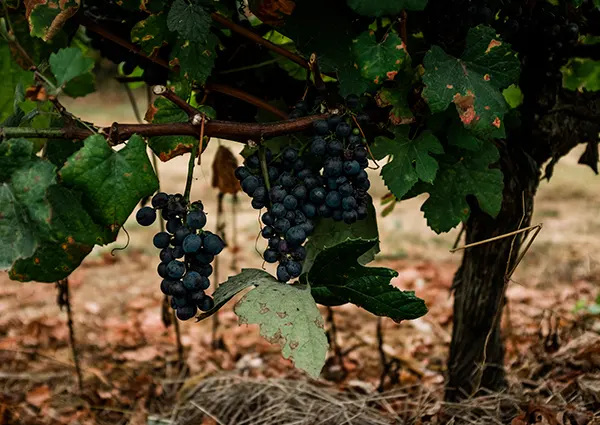
The most common red grape varieties in Portugal
Touriga Nacional
- Region – Dão, Porto and Douro, Bairrada, Alentejo and Tejo
- It is the most emblematic grape variety in Portugal. It has long been cultivated throughout Portuguese territory and in the 19th century it occupied 90% of Portuguese vineyards. It is versatile, which means that a wide variety of wines can be created, from sparkling wines to Port wine.
Touriga Franca
- Region – Porto and Douro, Bairrada, Alentejo and Setúbal Peninsula
- It produces balanced, full-bodied wines with good aromatic intensity.
Tinta Roriz / Aragonez
- Region – Porto and Douro, and Dão
- It is one of the best grape varieties for Port and Douro wines.
Trincadeira / Tinta Amarela
- Region – Alentejo, Tejo, Lisbon, Porto and Douro
- It produces intensely coloured wines, with fresh acidity and rich in tannins.
Baga
- Region – Bairrada and Dão
- Good acidity and great ageing potential.
Castelão
- Region – Setúbal Peninsula, Tejo, Lisbon and Algarve
- It is the most planted red grape variety in the south of Portugal.
The most common white grape varieties in Portugal
Alvarinho
- Region – Vinho Verde
- Moderate alcohol, high acidity. Dry and firm, it predominates in single-variety wines, but is often mixed with Loureiro and Trajadura in Vinho Verde blends.
Arinto
- Region – Lisbon (Bucelas) and Vinho Verde
- Great acidity, moderate alcohol with great capacity to age, in oak or not.
Fernão Pires / Maria Gomes
- Region – Bairrada, Lisbon, Tejo, Setúbal Peninsula and Alentejo
- The most planted white grape variety in Portugal.
Encruzado
- Region – Dão
- It produces wines that are aromatically discreet. It stands out for its structure, full palate and great ageing capacity. It is particularly suitable for fermentation and ageing in barrels, resulting in wines with remarkable freshness and balance.
You can see our video on the topic you were reading here: